Menu

Le Roi du Jardin
Gardens, parks and designed landscapes.
Historic gardens and parks that are worth the journey in themselves
Explore the collection- 261places
- 17Countries
- 150From source records
Bagnaia, Lazio — Ljuba brank · Wikimedia Commons · CC BY-SA 4.0
Provenance
This world opens with castles and estates whose Base Mérimée record mentions a garden. Gardens that exist as gardens — Villandry as a garden rather than as a castle — are not in the dataset yet. What follows is therefore what the source provides, not what the world will become.
01 — The collection
Gardens, parks and designed landscapes.
Gardens and parks worth visiting in their own right — including those attached to a castle that already appears in Le Roi du Château.

Kasteel van Gaasbeek
Lennik
Kasteel van Gaasbeek is a château at Lennik, Vlaams-Brabant, in Belgium. The recorded building campaigns date from the 13th, 14th, 15th, 17th, 18th and 19th centuries. Its architecture is recorded as barok. The register records it as “beschermd onroerend erfgoed”. Details are drawn from the Inventaris Onroerend Erfgoed (Vlaanderen).
Editorial selectionCC BY-SA 3.0

Kroměříž Castle
Kroměříž’s archiepiscopal castle is a Baroque monument in Moravia. The institution describes centuries of ownership by the bishops and archbishops of Olomouc, for whom it served as a representative residence and meeting place. The castle and its gardens entered the UNESCO World Heritage List in 1998.
Editorial selectionCC BY-SA 4.0

Ljubljana Botanical Garden
The University of Ljubljana Botanic Garden began in 1810 during the Illyrian Provinces, initially as a collection of native flora associated with the Central School. Franc Hladnik planned the garden and became its first director. It has belonged to the University of Ljubljana since 1920. Its history includes plant exchange, botanical publications and the development of glasshouse collections. The garden’s own historical account records protection as a monument of landscape gardening from 1991 and the opening of a new tropical glasshouse in 2010.
Editorial selectionCC BY-SA 3.0

Loki-Schmidt-Garten
The Loki-Schmidt-Garten is the 24-hectare outdoor site of Hamburg’s botanical garden in Klein Flottbek. The institution’s greenhouses are at a separate site at Dammtor. The university describes research, education and recreation among its purposes. Its botanical work includes biodiversity, nature conservation and understanding plants.
Editorial selectionCC BY 3.0

Manoir de Fontenay
Lignières-de-Touraine · Indre-et-Loire
Manoir de Fontenay is a manor house at Lignières-de-Touraine, Indre-et-Loire, in the Centre-Val de Loire region of France. The recorded building campaigns date from the 15th and 16th centuries. It is protected as a monument historique at the second level (inscrit). Details are drawn from the Base Mérimée of the French Ministry of Culture.
Source recordCC BY-SA 3.0

Manoir de Senneville
Amfreville-sous-les-Monts · Eure
Manoir de Senneville is a manor house at Amfreville-sous-les-Monts, Eure, in the Normandie region of France. The recorded building campaigns date from the 16th and 17th centuries. It is protected as a monument historique at the higher of the two levels (classé). Details are drawn from the Base Mérimée of the French Ministry of Culture.
Source recordCC BY-SA 3.0

Manoir de Tronjoly
Cléder · Finistère
Manoir de Tronjoly is a manor house at Cléder, Finistère, in the Bretagne region of France. The recorded building campaigns date from the 16th and 17th centuries. It is protected as a monument historique at the higher of the two levels (classé). Details are drawn from the Base Mérimée of the French Ministry of Culture.
Source recordCC BY-SA 3.0

Manoir des Basses-Rivières
Rochecorbon · Indre-et-Loire
Manoir des Basses-Rivières is a manor house at Rochecorbon, Indre-et-Loire, in the Centre-Val de Loire region of France. The recorded building campaign dates from the 18th century. It is protected as a monument historique at the second level (inscrit). Details are drawn from the Base Mérimée of the French Ministry of Culture.
Source recordCC BY-SA 4.0
- Image in preparation
Manoir seigneurial de Maré
Pontlevoy · Loir-et-Cher
Manoir seigneurial de Maré is a manor house at Pontlevoy, Loir-et-Cher, in the Centre-Val de Loire region of France. The recorded building campaigns date from the 15th and 16th centuries. It is protected as a monument historique at the second level (inscrit). Details are drawn from the Base Mérimée of the French Ministry of Culture.
Source record 
Milde Arboretum and Botanical Garden
The Arboretum at Milde lies south of Bergen and forms part of the University Museum’s living plant collections. It brings together trees and shrubs from Norway and other regions. The university identifies rhododendron collections, a heather garden, historic Bergen garden plants at Blondehushagen and a rose collection among its principal features. Bergen Botanical Garden is immediately adjacent, allowing the two collections to be visited together. The university states that the outdoor areas are open throughout the year and admission is free.
Editorial selectionCC BY-SA 3.0

National Botanic Gardens (Ireland)
The National Botanic Gardens at Glasnevin in Dublin hold plant collections from habitats around the world. Their restored historic glasshouses include Richard Turner’s Curvilinear Range and the Great Palm House. The gardens have been associated with their counterpart at Kilmacurragh in County Wicklow since 1854.
Editorial selectionCC BY-SA 2.0

Nygårdsparken
Nygårdsparken occupies sloping ground between Nygård and Møhlenpris in Bergen. Its creation followed the establishment of a park association in 1880 by physicians Joachim Georg Wiesener and Klaus Hanssen. Bergen municipality identifies the English landscape style as a defining quality of the park. Recent rehabilitation has included paths, planting, drainage and water features; a recreation of the historic lower-park fountain was installed in April 2024. The municipality maintains the grounds as a public park and meeting place.
Editorial selectionCC BY-SA 3.0

Orto Botanico dell'Università di Bologna
Bologna’s botanical garden and herbarium form part of the university museum system. Their collections developed in parallel, with major herbarium holdings associated with directors of the garden. The institution is located at Via Irnerio 42 in Bologna.
Editorial selectionCC BY-SA 4.0

Orto Botanico di Bergamo "Lorenzo Rota"
Bergamo’s botanical garden was inaugurated on 17 June 1972, following a project begun in 1969 by Luciano Malanchini and Guido Isnenghi. Its origins were civic rather than academic. The Italian environmental institute ISPRA describes thematic beds devoted largely to native flora, including woodland, alpine and aquatic environments.
Editorial selectionCC BY 3.0

Orto Botanico di Firenze
Florence’s Giardino dei Semplici was founded on 1 December 1545 by Cosimo I de Medici. The university garden maintains living plant collections for conservation, research and education. Its collections use several organising principles, including plant relationships, adaptation to environmental conditions, and uses such as food, medicine, textiles and dyes.
Editorial selectionCC BY-SA 3.0

Oslo Botanical Garden
Oslo Botanical Garden is at Tøyen and is part of the University of Oslo’s Natural History Museum. The garden includes an arboretum, systematic and herb collections, an alpine garden and themed planting. Its Oldemors hage section opened in 2008 and conserves old perennial garden plants gathered from eastern Norway. The Norwegian Institute of Bioeconomy Research describes that section as both a living gene bank and an accessible sensory garden. Its plants were selected for documented cultivation histories reaching back to the 1950s or earlier.
Editorial selectionCC BY-SA 3.0

Oslo Palace Park
The Palace Park, Slottsparken, surrounds the Royal Palace in Oslo. The Royal Court describes it as one of the capital’s earliest large parks and states that it has been open to the public from the beginning. Its landscape includes lawns, meadows, perennial planting, mature trees and ponds. The park is a protected cultural monument cared for by the Royal Court’s gardeners. Public access is available throughout the year. Individual areas, events and the palace itself have their own visitor arrangements.
Editorial selectionPublic domain

Painshill Park
Source recordCC-BY-SA-2.0

Palacio de la Aljafería
Zaragoza
Palacio de la Aljafería is a château at Zaragoza, Aragon, in Spain. Its architecture is recorded as Renaissance architecture. The register records it as “World Heritage Site”. Details are drawn from Wikidata.
Editorial selectionCC BY-SA 4.0
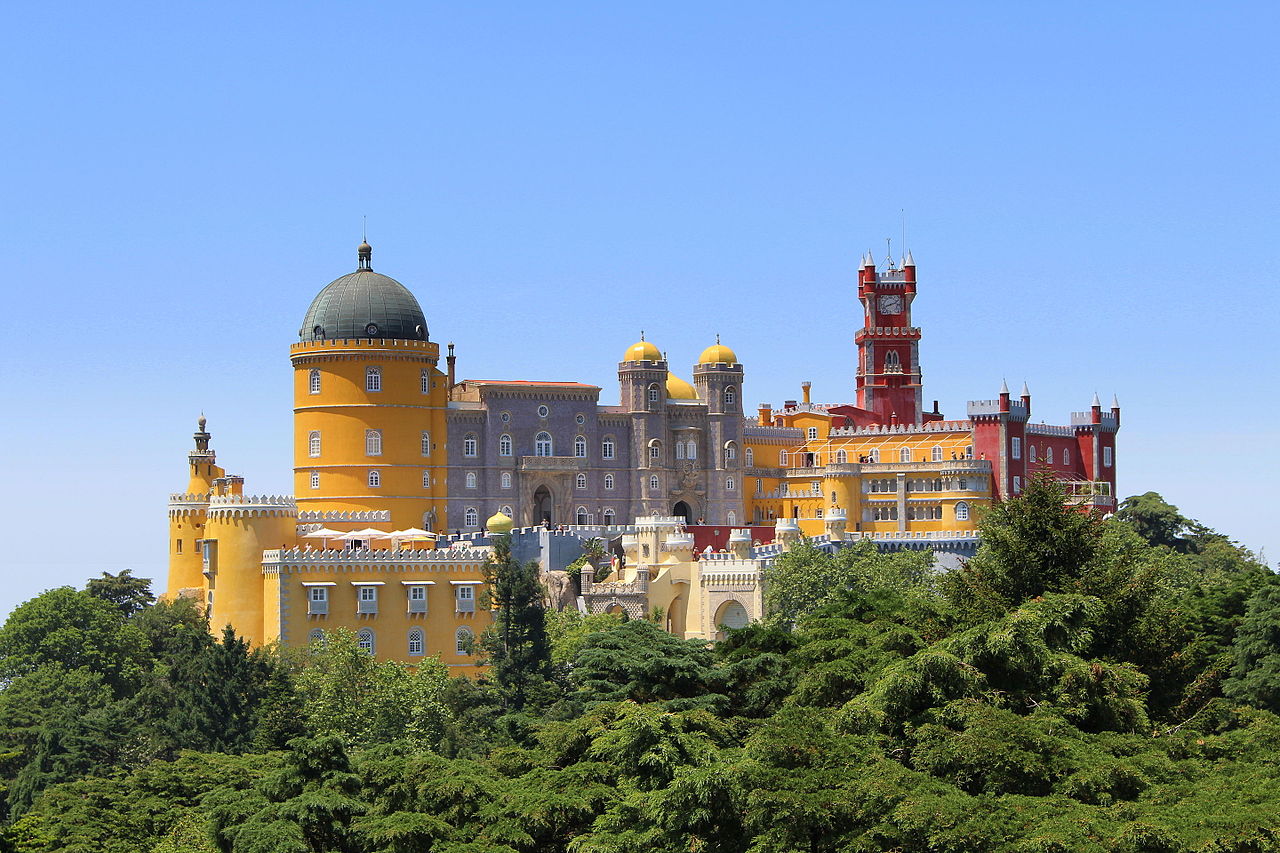
Pena Palace
Pena Palace and its surrounding park form an ensemble on the Sintra hills. The palace is associated with Fernando II and Portuguese Romanticism. Its coloured façades rise above a wooded park crossed by winding paths.
Editorial selectionCC BY 2.0

Regents Park
Editorial selectionCC BY-SA 2.0

Ringve Botanical Garden
Ringve Botanical Garden is on the Lade peninsula, about three kilometres east of central Trondheim. Established by the university in 1973, it is managed by NTNU University Museum. Its living collections support research, teaching and the conservation of threatened species. The garden includes an arboretum, a systematic collection showing plant relationships, historic perennials and a Renaissance garden with herbs used locally since at least 1694. The estate’s nineteenth-century landscape park forms another distinct area. NTNU states that the garden is always open and entry is free.
Editorial selectionCC BY-SA 3.0

Rogaland Arboretum
Rogaland Arboretum is at Espeland in Sandnes. Its operator presents it as a botanical garden and living museum devoted to trees and shrubs. The grounds extend over approximately 70 hectares, with a substantial network of public paths. The collections support the study and conservation of plants and include a wide range of species. The arboretum welcomes visitors throughout the year and provides maps, collection information and practical guidance on accessibility. Café facilities and organised activities follow separate schedules.
Editorial selectionCC BY-SA 3.0

Rosenborg Castle
Rosenborg is a Renaissance palace beside the King’s Garden in central Copenhagen. Its collections include the Danish crown jewels and royal regalia. The palace also contains Christian IV’s audience rooms and the bedchamber where he died in 1648.
Editorial selectionCC BY-SA 4.0