Menu

Le Roi du Jardin
Tuinen, parken en landgoedaanleg.
Historische tuinen en parken die op zichzelf de reis waard zijn
Naar de collectie- 295plaatsen
- 17Landen
- 150Uit de bron
Bagnaia, Lazio — Ljuba brank · Wikimedia Commons · CC BY-SA 4.0
Herkomst
Deze wereld opent met kastelen en domeinen waarvan de Base Mérimée een tuin vermeldt. Tuinen die als tuin bestaan — Villandry als tuin en niet als kasteel — zitten nog niet in de dataset. Wat hieronder staat is dus wat de bron levert, niet wat de wereld ooit wordt.
01 — De collectie
Tuinen, parken en landgoedaanleg.
Tuinen en parken die op zichzelf de moeite waard zijn — ook wanneer ze bij een kasteel horen dat al in Le Roi du Château staat.

Jardin des Plantes Sauvages du Conservatoire botanique national de Bailleul
Bailleul's Jardin des Plantes Sauvages is a landscaped garden of 10,000 square metres with nearly 1,000 labelled plant species in themed plots. Its recreated natural habitats include dunes, wet meadows, calcareous grassland, heath and peat bog, presenting living examples for understanding conservation.
Redactioneel opgenomenCC BY-SA 4.0

Jardin des Serres d'Auteuil
Jean-Camille Formigé designed the glasshouses and overall garden arrangement at the Jardin des Serres d’Auteuil; work began in 1895 and finished three years later. The Paris garden combines historic glasshouses with landscaped areas, including Japanese-inspired and Mediterranean planting. Its botanical collections are organised both thematically and by plant groups, including palms, Ficus, begonias and ferns.
Redactioneel opgenomenCC BY-SA 3.0 de

Jardins de Callunes
The Jardins de Callunes at Ban-de-Sapt in the Vosges were created between 1994 and 1996 with landscape designer Jacques Couturieux. The site occupies a former sandstone quarry later used as a waste dump. The regional gardens association describes landscaped quarry features and a First World War trench, linked garden spaces, and mature trees retained from the existing vegetation.
Redactioneel opgenomenCC BY 3.0

Jardins de Salagon
The gardens of the former priory of Salagon lie in Mane, in Alpes-de-Haute-Provence. The French Ministry of Culture presents them as ethnobotanical gardens devoted to relationships between people and plants. The map uses the IGN point for the museum and garden site.
Redactioneel opgenomenCC BY-SA 3.0

Jardins de Valloires
The Jardins de Valloires lie in the Authie valley at the foot of the Cistercian abbey in Argoules. The French parks and gardens committee traces their creation to 1987 through the collaboration of landscape designer Gilles Clément, plant collector Jean-Louis Cousin and the Syndicat Mixte Baie de Somme. Its record also attributes the Garden of Evolution, dedicated to Jean-Baptiste Lamarck, to Vincent Delaitre and Gilles Clément in 2003.
Redactioneel opgenomenCC BY-SA 4.0

Kasteel Amerongen
Utrechtse Heuvelrug
Kasteel Amerongen is a château at Utrechtse Heuvelrug, Utrecht, in the Netherlands. The recorded building campaigns date from the 17th, 18th, 19th and 20th centuries. The register records it as “rijksmonument”. Details are drawn from Rijksmonumentenregister.
Redactioneel opgenomenCC BY-SA 3.0 nl

Kasteel Duivenvoorde
Voorschoten
Kasteel Duivenvoorde is a château at Voorschoten, Zuid-Holland, in the Netherlands. The recorded building campaigns date from the 13th, 17th, 18th and 19th centuries. The register records it as “rijksmonument”. Details are drawn from Rijksmonumentenregister.
Redactioneel opgenomenCC BY-SA 3.0
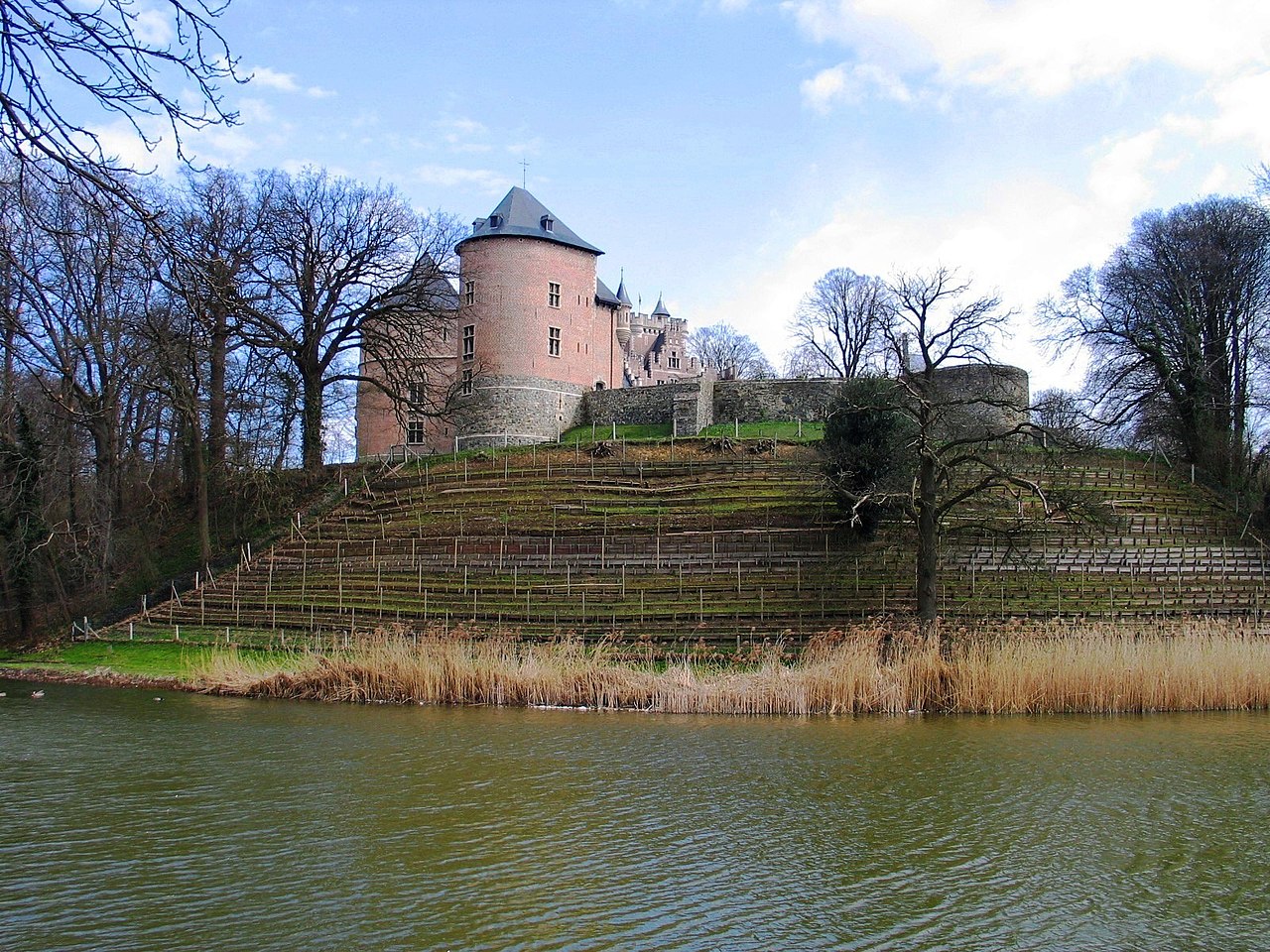
Kasteel van Gaasbeek
Lennik
Kasteel van Gaasbeek is a château at Lennik, Vlaams-Brabant, in Belgium. The recorded building campaigns date from the 13th, 14th, 15th, 17th, 18th and 19th centuries. Its architecture is recorded as barok. The register records it as “beschermd onroerend erfgoed”. Details are drawn from the Inventaris Onroerend Erfgoed (Vlaanderen).
Redactioneel opgenomenCC BY-SA 3.0

Kroměříž Castle
Kroměříž’s archiepiscopal castle is a Baroque monument in Moravia. The institution describes centuries of ownership by the bishops and archbishops of Olomouc, for whom it served as a representative residence and meeting place. The castle and its gardens entered the UNESCO World Heritage List in 1998.
Redactioneel opgenomenCC BY-SA 4.0

Laxenburg Castle Park
Laxenburg Castle Park in Lower Austria developed into an English-style landscape garden under Emperor Francis II/I. The operator dates the main phase of that work to 1798–1835 and records the creation of the large lake during the same reign. Franzensburg was conceived as a museum in the park. The map uses the representative park point recorded by IIASA in DEIMS.
Redactioneel opgenomenCC BY-SA 3.0

Ljubljana Botanical Garden
The University of Ljubljana Botanic Garden began in 1810 during the Illyrian Provinces, initially as a collection of native flora associated with the Central School. Franc Hladnik planned the garden and became its first director. It has belonged to the University of Ljubljana since 1920. Its history includes plant exchange, botanical publications and the development of glasshouse collections. The garden’s own historical account records protection as a monument of landscape gardening from 1991 and the opening of a new tropical glasshouse in 2010.
Redactioneel opgenomenCC BY-SA 3.0

Loki-Schmidt-Garten
The Loki-Schmidt-Garten is the 24-hectare outdoor site of Hamburg’s botanical garden in Klein Flottbek. The institution’s greenhouses are at a separate site at Dammtor. The university describes research, education and recreation among its purposes. Its botanical work includes biodiversity, nature conservation and understanding plants.
Redactioneel opgenomenCC BY 3.0

Manoir de Fontenay
Lignières-de-Touraine · Indre-et-Loire
Manoir de Fontenay is a manor house at Lignières-de-Touraine, Indre-et-Loire, in the Centre-Val de Loire region of France. The recorded building campaigns date from the 15th and 16th centuries. It is protected as a monument historique at the second level (inscrit). Details are drawn from the Base Mérimée of the French Ministry of Culture.
BronregistratieCC BY-SA 3.0

Manoir de Senneville
Amfreville-sous-les-Monts · Eure
Manoir de Senneville is a manor house at Amfreville-sous-les-Monts, Eure, in the Normandie region of France. The recorded building campaigns date from the 16th and 17th centuries. It is protected as a monument historique at the higher of the two levels (classé). Details are drawn from the Base Mérimée of the French Ministry of Culture.
BronregistratieCC BY-SA 3.0

Manoir de Tronjoly
Cléder · Finistère
Manoir de Tronjoly is a manor house at Cléder, Finistère, in the Bretagne region of France. The recorded building campaigns date from the 16th and 17th centuries. It is protected as a monument historique at the higher of the two levels (classé). Details are drawn from the Base Mérimée of the French Ministry of Culture.
BronregistratieCC BY-SA 3.0

Manoir des Basses-Rivières
Rochecorbon · Indre-et-Loire
Manoir des Basses-Rivières is a manor house at Rochecorbon, Indre-et-Loire, in the Centre-Val de Loire region of France. The recorded building campaign dates from the 18th century. It is protected as a monument historique at the second level (inscrit). Details are drawn from the Base Mérimée of the French Ministry of Culture.
BronregistratieCC BY-SA 4.0
- Beeld in voorbereiding
Manoir seigneurial de Maré
Pontlevoy · Loir-et-Cher
Manoir seigneurial de Maré is a manor house at Pontlevoy, Loir-et-Cher, in the Centre-Val de Loire region of France. The recorded building campaigns date from the 15th and 16th centuries. It is protected as a monument historique at the second level (inscrit). Details are drawn from the Base Mérimée of the French Ministry of Culture.
Bronregistratie 
Milde Arboretum and Botanical Garden
The Arboretum at Milde lies south of Bergen and forms part of the University Museum’s living plant collections. It brings together trees and shrubs from Norway and other regions. The university identifies rhododendron collections, a heather garden, historic Bergen garden plants at Blondehushagen and a rose collection among its principal features. Bergen Botanical Garden is immediately adjacent, allowing the two collections to be visited together. The university states that the outdoor areas are open throughout the year and admission is free.
Redactioneel opgenomenCC BY-SA 3.0

National Botanic Gardens (Ireland)
The National Botanic Gardens at Glasnevin in Dublin hold plant collections from habitats around the world. Their restored historic glasshouses include Richard Turner’s Curvilinear Range and the Great Palm House. The gardens have been associated with their counterpart at Kilmacurragh in County Wicklow since 1854.
Redactioneel opgenomenCC BY-SA 2.0

Nygårdsparken
Nygårdsparken occupies sloping ground between Nygård and Møhlenpris in Bergen. Its creation followed the establishment of a park association in 1880 by physicians Joachim Georg Wiesener and Klaus Hanssen. Bergen municipality identifies the English landscape style as a defining quality of the park. Recent rehabilitation has included paths, planting, drainage and water features; a recreation of the historic lower-park fountain was installed in April 2024. The municipality maintains the grounds as a public park and meeting place.
Redactioneel opgenomenCC BY-SA 3.0

Orto Botanico dell'Università di Bologna
Bologna’s botanical garden and herbarium form part of the university museum system. Their collections developed in parallel, with major herbarium holdings associated with directors of the garden. The institution is located at Via Irnerio 42 in Bologna.
Redactioneel opgenomenCC BY-SA 4.0

Orto Botanico di Bergamo "Lorenzo Rota
Bergamo’s botanical garden was inaugurated on 17 June 1972, following a project begun in 1969 by Luciano Malanchini and Guido Isnenghi. Its origins were civic rather than academic. The Italian environmental institute ISPRA describes thematic beds devoted largely to native flora, including woodland, alpine and aquatic environments.
Redactioneel opgenomenCC BY 3.0

Orto Botanico di Firenze
Florence’s Giardino dei Semplici was founded on 1 December 1545 by Cosimo I de Medici. The university garden maintains living plant collections for conservation, research and education. Its collections use several organising principles, including plant relationships, adaptation to environmental conditions, and uses such as food, medicine, textiles and dyes.
Redactioneel opgenomenCC BY-SA 3.0

Oslo Botanical Garden
Oslo Botanical Garden is at Tøyen and is part of the University of Oslo’s Natural History Museum. The garden includes an arboretum, systematic and herb collections, an alpine garden and themed planting. Its Oldemors hage section opened in 2008 and conserves old perennial garden plants gathered from eastern Norway. The Norwegian Institute of Bioeconomy Research describes that section as both a living gene bank and an accessible sensory garden. Its plants were selected for documented cultivation histories reaching back to the 1950s or earlier.
Redactioneel opgenomenCC BY-SA 3.0